
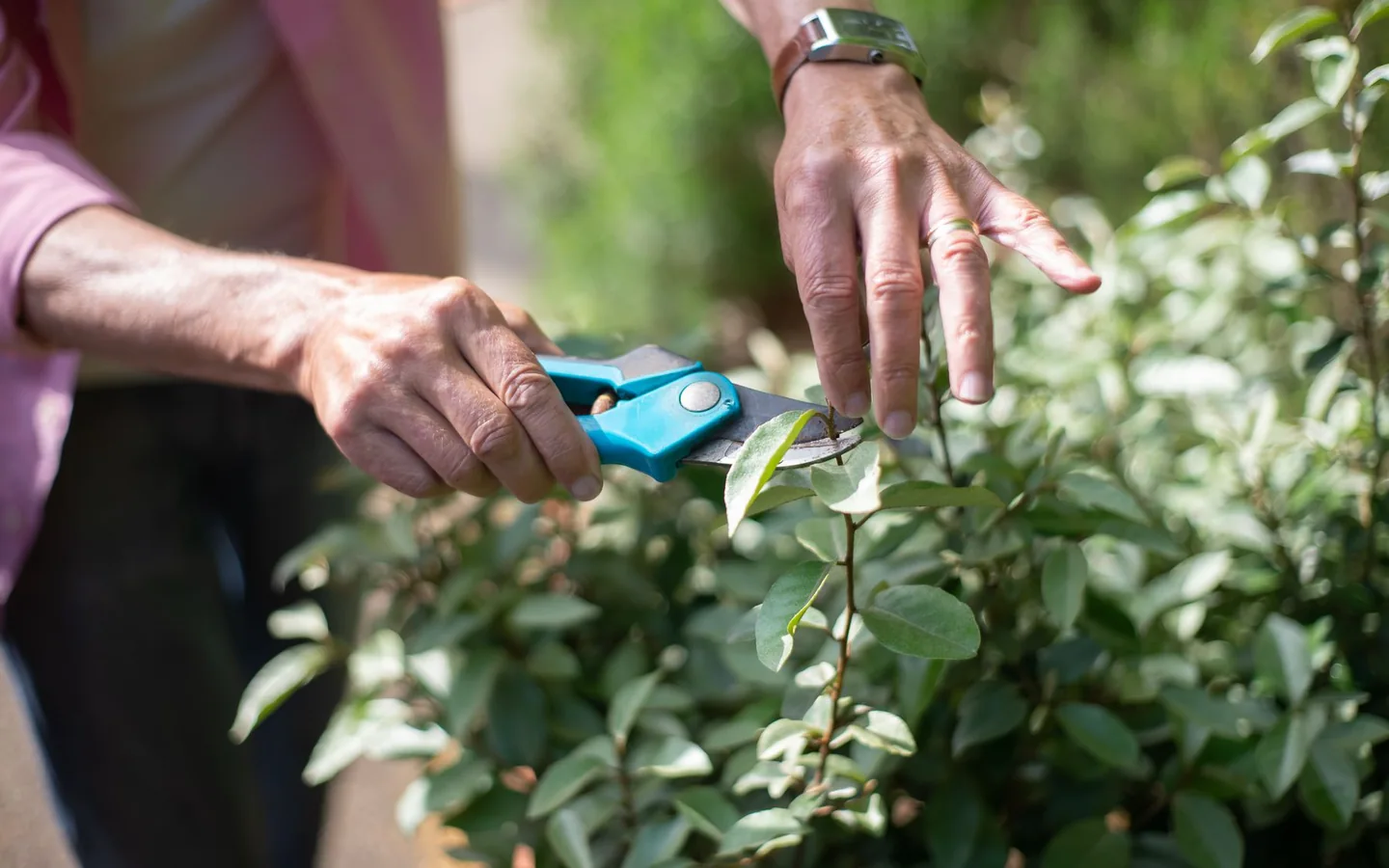
Pruning can encourage flowers, reduce congestion and keep a plant healthy. But it can also remove next year's buds, leave a wound that struggles to close or expose a tender shrub to damaging frost.
Most serious mistakes are not caused by poor-quality secateurs. They're caused by cutting without knowing what the plant is trying to do.
Here's how to avoid the failures that make gardeners wish they'd left the plant alone.
1. Pruning every shrub in winter
Many deciduous summer-flowering shrubs grow their buds on fresh stems and benefit from a spring cut. But others flower on wood formed the year before.
If you cut a spring-flowering forsythia or flowering currant in February, you can remove the stems that would have produced this spring's flowers.
Fix: identify the species and flowering period before choosing the month. Spring-flowering plants often need pruning immediately after they finish blooming.
Our winter shrub-pruning guide separates genuine dormant-season jobs from the plants better left until another time.
2. Treating every hydrangea the same
A traditional mophead hydrangea commonly flowers on older stems, while Hydrangea paniculata and H. arborescens flower on the current season's growth.
Cutting every hydrangea down to 20cm may be appropriate for neither the plant's size nor its flowering habit.
Fix: identify the hydrangea type. Remove faded heads from mopheads to healthy buds in spring, while treating paniculata and arborescens according to their new-wood flowering needs.
Don't force a species-specific pruning task into a universal calendar rule.
3. Removing too much leaf area
Leaves provide energy for roots and new growth. Taking away most of an evergreen's healthy foliage in one session can leave it struggling to recover.
A plant weakened by drought, root disease or poor drainage is less able to respond to heavy cutting.
Fix: prune to solve an actual problem, starting with dead, rubbing or badly positioned branches. For a large healthy shrub needing serious size reduction, consider staged renovation rather than one drastic cut.
4. Leaving long dead stubs
Cutting a branch halfway between buds can leave a bare section with no viable growing point at its end.
That stub may die back, spoil the appearance and create an entry point for decay.
Fix: on small stems, cut just above a sound bud or suitable side shoot. On branches, use the proper junction rather than leaving an arbitrary length of wood.
The correct final cut varies by plant; don't routinely cut flush into a larger trunk.
5. Cutting through the branch collar
At the base of a branch, a slight swelling may mark the branch collar where the tree or shrub naturally develops tissue to close over a wound.
A flush cut that removes that collar creates a larger injury and can slow the process of compartmentalising damage.
Fix: for larger branches, cut just outside the collar without leaving a long stub. Use an appropriate three-cut method on heavy branches so falling wood doesn't tear down the bark.
Large tree work near property, roads or power lines belongs with a qualified professional.
6. Topping a tree instead of managing its crown
Removing the top of a mature tree at an arbitrary height may produce weakly attached vigorous shoots and an ugly structure.
It doesn't necessarily make the tree safer, and it can create new maintenance requirements.
Fix: seek professional advice for a tree that's too large or structurally concerning. Careful crown reduction to appropriate lateral branches is different from indiscriminate topping.
Don't use a domestic hedge trimmer to solve a mature tree problem.
7. Cutting old bare conifer wood
Most Leyland cypress and many other conifer hedges won't regrow from old brown, leafless stems.
If you cut beyond the remaining green foliage, the exposed patch can stay bare for years.
Fix: identify the hedge species and maintain a green surface when trimming. Yew is a notable exception that can regenerate from older wood under suitable conditions.
For oversized conifers, professional assessment or replacement may be more realistic than a severe cut.
8. Cutting during frost or severe drought
Pruning exposes previously sheltered leaves and creates wounds. Severe frost can damage vulnerable new growth, while a shrub already struggling for water may not have the resources for vigorous recovery.
Fix: choose a suitable season and check the forecast. For many evergreens, mild spring weather is preferable; for particular flowering shrubs, wait until after their display.
Do not prune simply because it's the first sunny day after snow.
9. Using blunt or dirty tools
Blunt blades crush or tear small stems rather than making a clean cut. Tools contaminated by diseased growth can move pathogens between plants.
Fix: sharpen or replace worn blades, clean debris after work and disinfect tools appropriately when disease is suspected.
Use secateurs only within their cutting capacity. Loppers or a saw are safer for thicker branches.
10. Removing the wrong rose shoots
Climbing roses need long framework stems retained and trained, while the shorter flowered laterals are often shortened.
If you cut all the main canes down each winter as if they were bush roses, the climber loses the structure needed to cover a wall.
Fix: confirm whether your plant is a climbing rose, a once-flowering rambler or a bush rose. Learn which stems carry future flowers.
Our guide to when to prune climbing roses explains the seasonal distinction.
11. Clipping before checking for birds
Birds can nest inside thick hedges and shrubs, sometimes earlier or later than expected.
In the UK, occupied wild-bird nests are protected by law. A routine trim is not an excuse to damage or disturb one.
Fix: check the plant carefully before cutting, stop if you find an active nest and delay work until it is no longer in use.
Hedge trimming should also avoid unsafe ladders and power tools near hidden wires or fences.
12. Pruning to fix a soil problem
Yellow leaves, wilting and poor flowering can reflect roots struggling with unsuitable moisture, pH, light or nutrient availability.
Removing branches won't automatically repair those conditions, and drastic cutting may make a weakened plant even less resilient.
Fix: inspect soil and growing conditions first. Our natural soil-improvement guide explains structure, drainage and organic matter.
Only prune if there is a genuine structural or plant-health reason.
A two-minute check before any cut
Ask yourself:
- What species or cultivar is this?
- Does it flower on last year's growth or this year's?
- Is the plant healthy enough to recover?
- Which exact branch needs to go, and why?
- Where is the correct junction or bud for the cut?
- Is the weather suitable, and are there active nests?
- Can the work be done safely from the ground?
If you cannot answer the first two questions, identify the plant before making a major cut.
Can a badly pruned shrub recover?
Often, particularly if its roots are healthy and it has live buds on the remaining wood. But some plants resent being cut into old leafless stems, and a lost flowering season cannot be restored by fertiliser.
Allow new growth to establish and correct any environmental problems. Do not keep cutting every week in the hope of forcing a response.
Is it better not to prune than to prune at the wrong time?
Often yes, especially on slow-growing evergreens and shrubs that flower on older wood. Remove immediate hazards or dead material as needed, but postpone cosmetic cutting when unsure.
Should I seal pruning wounds?
Most ordinary garden cuts do not need wound paints or sealants. Use appropriate clean cutting techniques and allow the plant's natural protective responses.
Can pruning cause disease?
Poor timing, excessive damage and contaminated tools can contribute to problems. Disease also depends on the organism, host and conditions.