
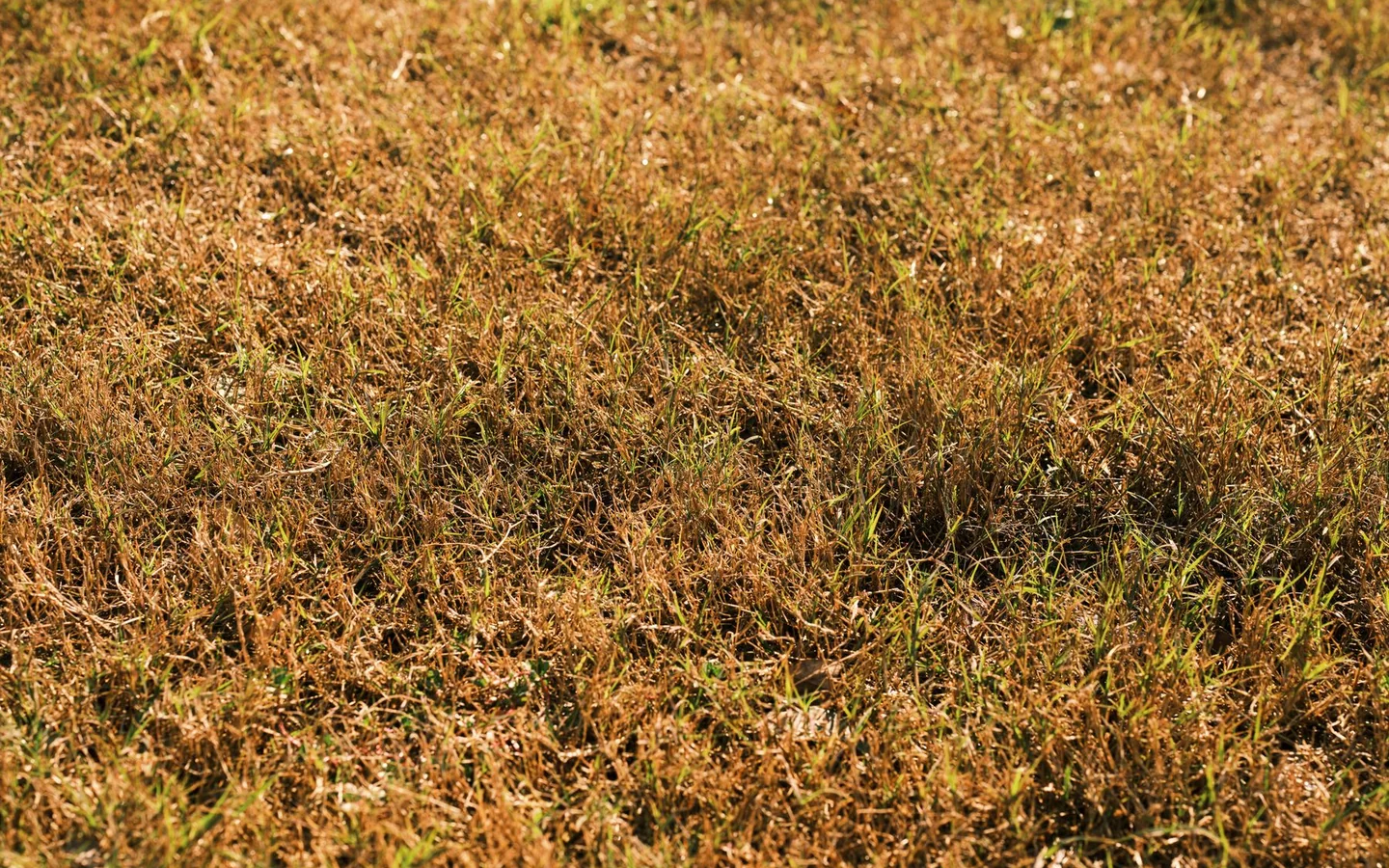
Yellow grass doesn't automatically need fertiliser. A lawn may turn pale after waterlogging, winter cold, drought, scalping, urine damage or disease. Some of these problems improve with time; others need a change in how the lawn is used or maintained.
Start with the pattern and timing. Did the whole lawn fade after a hot week, or did a few yellow rings appear after a dog's daily visit?
What colour pattern do you have?
| Appearance | First possibility to investigate |
|---|---|
| Whole lawn looks pale and grows slowly | Low nutrition, shade, seasonal slowdown or root stress |
| Yellow after prolonged winter rain | Waterlogging, weak roots or a lawn disease |
| Yellow stripes following mowing | Scalping, blunt blades or uneven cutting |
| Circular straw patches with greener rims | Concentrated pet urine, sometimes another local injury |
| Yellowing followed by brown during drought | Grass entering dormancy |
| Patches with pinkish-red threadlike strands | Red thread disease |
| Yellow areas with turf lifting easily | Root damage, potentially chafer grubs or leatherjackets |
These are leads, not proof. Inspect the grass and soil before deciding on treatment.
Why grass yellows after winter
Cold slows grass growth. Where soil remains saturated, roots have less oxygen and turf may look pale, weak or muddy. Walking across waterlogged ground worsens compaction and can rub away weakened grass.
Avoid heavy feeding or aggressive scarifying while the ground is cold and sodden. Wait until growth returns and assess whether the grass begins recovering on its own.
If traffic has made the lawn into a track, consider a proper path rather than another annual reseeding cycle. See our muddy lawn in winter guide for that situation.
Yellow lawn after mowing
Cutting very short can expose pale lower stems and crowns that were previously shaded. This is often most visible on bumps or where the mower wheels sink into wet ground.
Raise the cutting height, keep blades sharp and avoid removing a large proportion of the grass in one session.
If the same strips yellow after every cut, inspect mower setup and the shape of the lawn. Uneven ground can cause scalping even when the grass elsewhere is healthy.
Drought: yellow doesn't necessarily mean dead
Established cool-season turf often slows down and loses colour during prolonged dry weather. It may recover when rain returns.
Avoid applying strong feed to drought-stressed grass. Fertiliser can't replace water and may scorch the roots if used incorrectly.
If the lawn is usually robust, waiting for suitable rainfall can be more sensible than irrigating a large area heavily. New seed or newly laid turf is different: it needs enough water to establish.
Dog urine and distinct yellow spots
Concentrated urine can scorch individual spots, sometimes leaving a green ring around a brown or yellow centre where nitrogen is more dilute.
If you have a dog, consider where it usually toilets and whether new patches follow those visits. But circular damage can also have other causes, so don't rely only on shape.
Water fresh deposits promptly if practical. Don't give your dog dietary supplements or additives marketed as lawn fixes without veterinary advice.
Where crowns are dead, repair that spot rather than fertilising the whole lawn.
Can low nitrogen make grass yellow?
Yes. Turf that is growing slowly with uniformly pale older leaves may be underfed, particularly on poor sandy soil.
But root stress and shade can look similar. Check soil moisture, previous feeding and growth before buying fertiliser.
Most domestic lawns don't need intensive feeding. If a grass-only lawn genuinely needs a boost, use a seasonally appropriate product at the labelled rate.
Our lawn feed calculator helps estimate quantities after selecting the correct product rate.
Red thread and other diseases
Red thread can create irregular pale or straw-coloured patches, sometimes with small pinkish-red threadlike structures attached to blades in damp conditions.
It is often associated with slower-growing grass and may improve with suitable lawn care. A fertiliser isn't appropriate for every yellow patch, and avoid repeated unnecessary fungicide treatments.
Other diseases, including fusarium patch, have different symptoms. Check several blades, recent weather and the way the patch has spread.
If the turf lifts easily and roots are missing, inspect for soil pests rather than assuming a leaf disease.
Yellow grass in shade
Grass growing beneath dense trees may become weak from low light and competition for moisture. A little feed cannot make up for a permanently dark site.
Raise mowing height, reduce unnecessary wear and consider a suitable shade-tolerant grass mixture in moderate shade.
If there is almost no useful direct or filtered light, a ground-cover bed may make more sense than constant lawn rescue attempts.
A five-minute diagnosis
- Note whether yellowing is everywhere or concentrated in lines and circles.
- Check recent weather: heavy rain, frost, heat or drought.
- Feel soil beneath the surface for excessive moisture or dryness.
- Consider mowing height, urine, feeding and any recent spray.
- Inspect individual blades for lesions and unusual threads.
- Lift a small edge of severely damaged turf only if root damage is suspected.
- Correct the most plausible cause and watch new growth, not already damaged blades.
If patches are bare rather than merely yellow, grass seed may be needed after the cause is fixed. The grass seed calculator can help plan a small repair.
What not to do to yellow grass
Don't apply extra fertiliser because a previous feed didn't make it green overnight. Avoid cutting lower to remove colour, which can expose even more pale stems.
Don't irrigate wet soil, and don't use an insecticide without finding a relevant pest.
For ordinary seasonal care, our lawn care in February guide can help plan the move from winter to spring.
How quickly should it recover?
Grass with living crowns and healthy roots can produce green growth as conditions improve. A few days of rain won't revive truly dead turf.
If the same area turns yellow repeatedly, investigate its soil depth, shade and traffic rather than treating each episode separately.
Should I fertilise a yellow lawn?
Only when weak nutrition is a likely cause and the grass is actively growing. Yellowing alone is not a diagnosis.
Why is grass yellow after mowing?
Scalping, uneven ground and blunt mower blades are common factors. Raise the mower height and check equipment.
Can yellow lawn grass turn green again?
Often yes if the plants are alive and the cause is temporary. Dead crowns require reseeding or turf.