
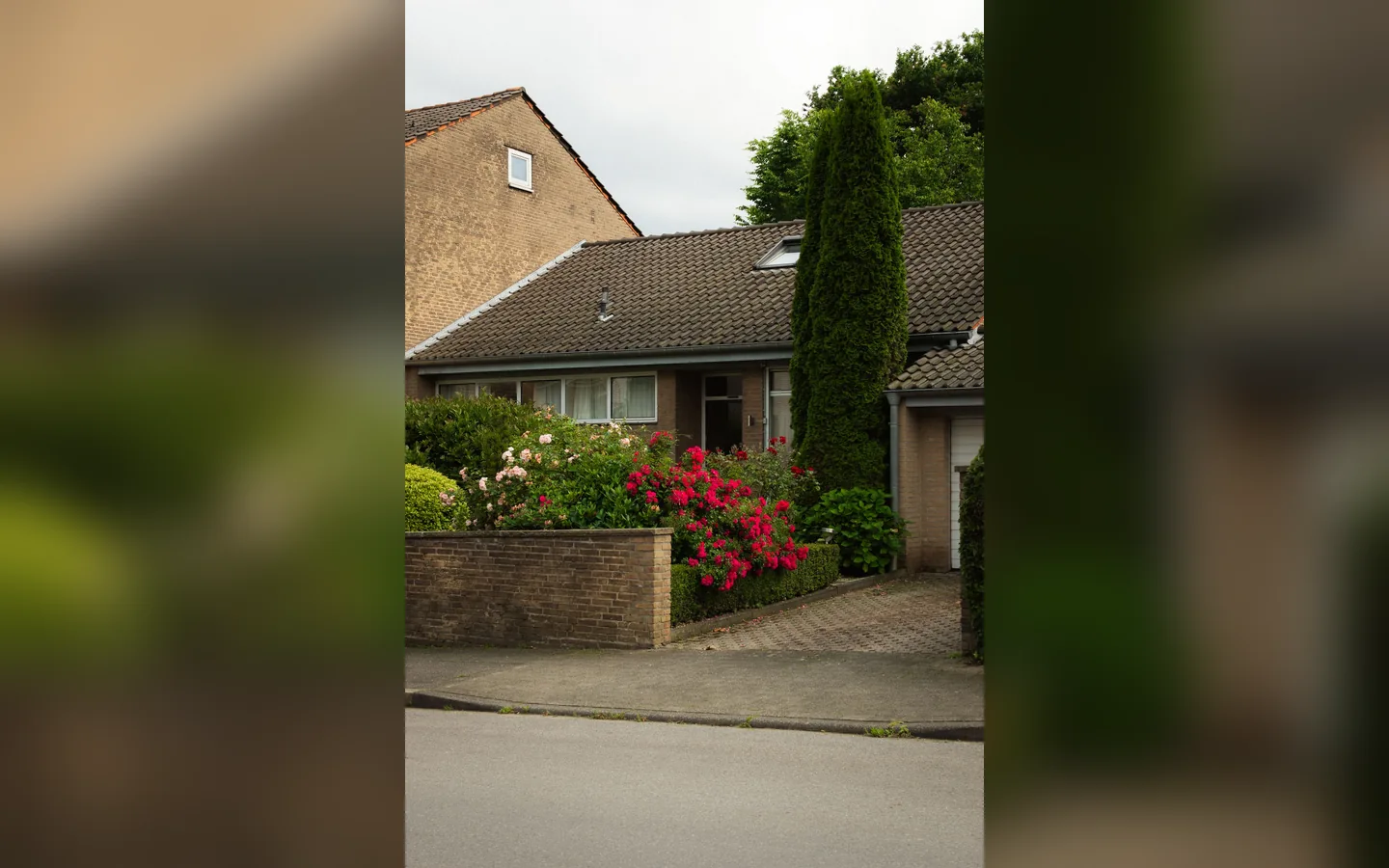
A front garden has to work harder than most back gardens. It needs to welcome visitors, allow safe access to the front door, accommodate bins or bicycles in some homes and still look good from the pavement.
The best design starts with how you use the space, not with a shopping list of decorative plants. A simple layout that leaves room for doors, paths and mature shrubs will usually look better — and cost less to maintain — than one crowded with features.
Start by measuring the actual space
Sketch the plot, including the house, pavement boundary, steps, gates, drains, utility covers, windows and bins.
Mark where people naturally walk. If you're always cutting across the existing lawn to reach the car, that route may be more useful as a proper path.
Measure the width of a likely footpath and account for children, shopping bags, wheelchairs or mobility aids where relevant. A beautiful narrow stepping-stone route isn't practical for everyone.
Use our garden area calculator to work out the usable planting and paving areas before buying materials.
Six front garden designs that work
| Type of front garden | Practical design idea | What to avoid |
|---|---|---|
| Small terraced frontage | Clear path, one repeated planting bed and low boundary planting | Too many tiny pots and clutter |
| Semi-detached lawn | Smaller simple lawn with one broad bed | Lots of awkward mowing strips |
| Front drive with beds | Permeable parking surface plus planted edges | Surface runoff straight to pavement |
| Narrow shady strip | Shade-tolerant low shrubs and ground cover | Sun-loving flowers in deep shade |
| Modern front garden | Simple paving, repeated grasses and well-scaled evergreens | Large architectural plants blocking windows |
| Cottage-style frontage | Informal perennials, small hedge and a clear path | Sprawling thorny growth across access |
Choose one theme and repeat a limited number of plants. An assortment of every flowering pot at the garden centre rarely looks cohesive.
A good front path changes everything
The path from pavement or drive to the door needs to stay usable in wet winter weather.
Choose a firm, slip-resistant surface with adequate drainage. Poorly laid paving can collect puddles or develop uneven steps.
Avoid materials that migrate easily, such as loose gravel on a steep slope or where wheelchair access is important. Edging helps keep surfaces in place.
Our paving slab calculator helps with quantities, while the paving wastage guide covers allowances for cuts and breakage.
Front gardens with parking: don't forget drainage
Where you need a driveway, try to keep as much planting as practical. Permeable paving, appropriately designed gravel or surfaces that allow rainwater to drain into a suitable planted area can help.
Don't assume you can pave an entire front garden without checking drainage or permission requirements. Planning rules can depend on surface size, drainage method, property status and local restrictions. Check the current rules with your local planning authority before starting.
Keep rainwater away from foundations and neighbouring property. A driveway that sends runoff across the pavement can create a safety and drainage problem.
A strip for planting isn't wasted space. It softens the view, supports wildlife and can help absorb rainfall.
Ideas for a very small terraced front garden
A tiny frontage may only have room for a path and a narrow bed. That's fine.
Use a low evergreen shrub of suitable mature size near the entrance, a repeating band of ground cover and perhaps a climbing plant trained carefully on appropriate supports.
A single generous pot by the door often looks better and needs less watering than six little containers scattered across the steps.
Keep plants clear of vents, letterboxes and outward-opening gates. Avoid tall prickly shrubs beside paths that visitors must squeeze through.
Front garden planting for privacy
A low hedge can separate the house from the pavement without making the ground-floor rooms gloomy.
Choose its final width and height carefully. A fast-growing conifer that seems cheap when small may become an annual trimming burden and eventually dominate a little front garden.
For more privacy without blocking the whole frontage, use a partial screen beside a sitting area or an appropriately placed evergreen shrub.
Our hedge spacing calculator helps plan quantities once you've chosen the species.
Easy-care plants by aspect
Sunny south- or west-facing frontages: depending on soil, lavender, catmint, suitable grasses and compact flowering shrubs can work well. They still need water while establishing.
Shadier north- or east-facing frontages: aucuba, suitable sarcococca, hellebores and shade-tolerant ground cover may be more reliable.
A dry north-facing strip beneath eaves is different from a damp open garden. Check water as well as sunlight.
Don't buy a species simply because it is labelled low-maintenance; choose one that fits the actual conditions and eventual space.
Front garden ideas on a budget
Start by reusing what is already sound:
- Keep the existing path if the foundation and drainage are good.
- Simplify the shape of a small lawn instead of replacing it.
- Clear perennial weeds properly before planting.
- Divide healthy, suitable clump-forming perennials to fill gaps.
- Buy smaller shrubs rather than instant large specimens.
- Mulch new beds while the planting matures.
- Repaint or repair existing sturdy gates and boundaries before replacing them.
Spend on a sound path or drainage where necessary, not on temporary ornaments that hide problems.
Avoid turning every square metre into gravel
A gravel garden can be attractive, but it isn't maintenance-free. Leaf litter accumulates, weeds germinate, stones migrate and loose surfaces are awkward in some locations.
Keep planting areas generous enough for mature roots and rain absorption. Ground-cover plants and a suitable mulch can often suppress weeds while looking less stark.
Before buying decorative gravel, use our gravel calculator to estimate realistic volume and cost.
Make bins and practical equipment less obvious
If your bins stand beside the front door, a properly sized enclosure or planted screen can help, but it must allow bins to be moved easily.
Keep lids accessible and maintain sufficient ventilation. Don't block gas meters, external electrical equipment, emergency exits or utility access.
A tidy practical enclosure often makes a bigger difference to the appearance of a frontage than several more ornamental pots.
Make it welcoming after dark
A suitable low-glare light near steps and the door improves safety. Avoid lights shining directly into neighbours' windows or onto the road.
A clear visible house number, dependable handrail where needed and simple unobstructed route matter more than elaborate garden lighting.
If you want wildlife-friendly lighting, use warm, directed light only where and when necessary rather than flooding the garden all night.
The simplest design for a first attempt
Try a firm path, one broad planted strip, a few correctly sized evergreen shrubs and a repeating hardy perennial for seasonal colour.
Give everything enough space. The best front gardens often have fewer plant types and clearer lines than you expect.
How can I make a front garden look good cheaply?
Tidy access and boundaries, remove weeds, reuse healthy plants and establish one well-planned bed rather than buying many decorative extras.
Can I replace my front lawn with a driveway?
Possibly, but check the applicable local planning and drainage requirements before work starts. Permeable drainage solutions may be important.
What is a good low-maintenance front garden plant?
A suitably sized evergreen shrub matched to your soil and light often provides year-round structure with less repeated care than seasonal bedding.