
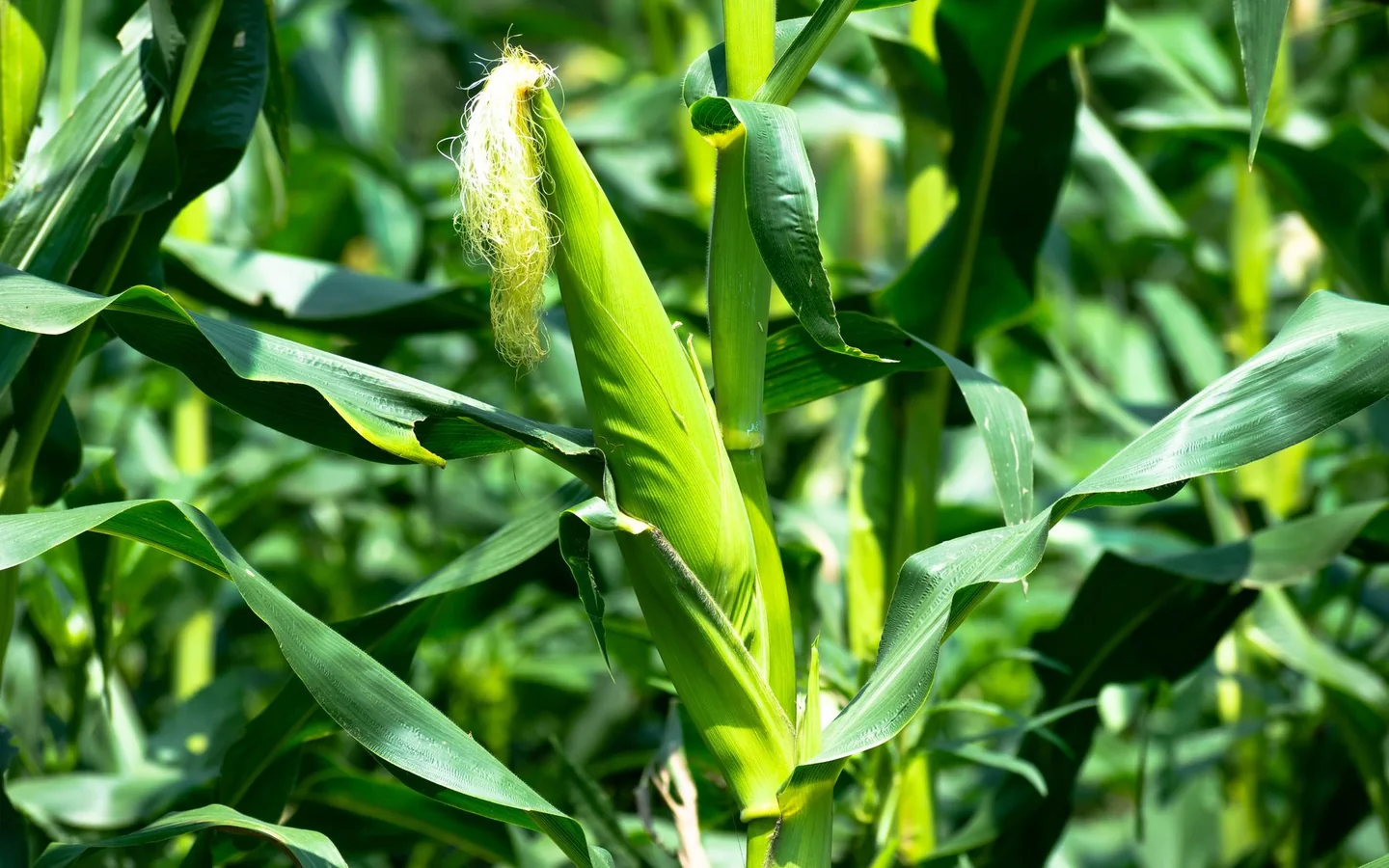
Sweetcorn is one of the most satisfying vegetables to pick and eat immediately. But it needs two things gardeners sometimes overlook: a warm growing season and enough neighbouring plants for reliable wind pollination.
A single tall stalk can look magnificent yet produce a poorly filled cob. Good results begin with choosing an early variety and planning the planting layout before sowing.
Choose sweetcorn for the UK climate
Sweetcorn varieties differ in maturity time, sweetness and cold tolerance. In many UK gardens, an early-maturing type is the most dependable choice because autumn arrives before long-season plants have finished filling cobs.
You may see standard sweet, sugar-enhanced and supersweet types. Read the packet for growing requirements and whether isolation from other types is recommended.
Some supersweet varieties can lose quality when cross-pollinated by nearby ordinary sweetcorn at the same time. Separation in distance or flowering time may be necessary, so don't casually mix several incompatible packets in one block.
Baby corn is different again: those cobs are picked tiny before the kernels swell.
Where should sweetcorn grow?
Give it full sun, shelter and fertile soil with good moisture retention. Tall plants are vulnerable to strong winds, particularly on exposed allotments.
Improve poor ground with well-rotted compost before planting. Avoid waterlogged soil, which restricts roots, and very dry shallow beds where plants struggle to fill cobs.
Sweetcorn can grow tall enough to shade nearby vegetables. Position it where the afternoon shadow won't cover your most sun-loving crops.
Our garden area calculator helps work out a sensible block rather than squeezing a few plants into one narrow strip.
When to sow sweetcorn in the UK
Sweetcorn needs warmth to germinate. Starting seed indoors in mid- to late spring usually works better than trying to force it into cold soil.
Sow seeds when you can provide 18–21°C for germination and enough light after seedlings emerge.
Outdoor sowing is possible in milder areas in late spring or early summer once the soil has warmed, but indoor-grown plants often give a useful head start.
Avoid sowing very early if seedlings will spend weeks trapped in small pots while outdoor frost risk remains high.
Sow seeds step by step
- Fill deep modules or small pots with peat-free seed compost.
- Sow one seed per cell, about 2.5cm deep.
- Water and keep the compost warm but not saturated.
- Move emerging seedlings into bright light as soon as they germinate.
- Grow plants on steadily without letting roots become badly pot-bound.
- Harden them off as the outdoor planting date approaches.
Most healthy seeds germinate within a couple of weeks under suitable warmth.
Use our seedling hardening-off guide before moving tender young corn outside.
When can sweetcorn be planted outside?
Usually in late May or early June, when frost risk has passed and soil conditions are warm enough.
Set out plants while they are still relatively young—often around 8–15cm tall—taking care not to tear the roots.
Water modules before moving, plant at their existing soil level, firm gently and water again. Shelter freshly planted seedlings if a cold snap is forecast.
Do not plant a tray of corn into cold, muddy soil simply to free up indoor space. Stalled plants may struggle to recover.
Why you should plant sweetcorn in blocks
Sweetcorn is wind-pollinated, not chiefly pollinated by bees. The tassel at the top releases pollen that must land on the silks emerging from developing cobs lower down.
Arrange plants in a square or rectangular block, not one long single row. Multiple neighbouring plants increase the chance that pollen reaches every cob silk as the wind changes direction.
Use the variety's spacing, commonly around 34–45cm between plants.
A single row against a fence often produces cobs with gaps because pollen blows away. More plants in a compact block are better than the same number spread along a long edge.
With baby corn, the goal is different: the small cobs are harvested before successful pollination swells the kernels.
How many plants do you need?
There isn't one magic number that works for every layout and garden. But a group of several rows is much more reliable than only two or three isolated stalks.
If you have room for only a tiny number of plants, consider another crop or plan to hand-pollinate carefully. Even then, weather and timing can limit the result.
A good test is whether most plants will have flowering neighbours immediately around them when tassels release pollen.
Staggering sowings too widely can leave some plants with no overlapping pollen supply. Keep a small block at a similar growth stage unless you have enough plants for separate batches.
Watering and feeding during growth
Sweetcorn grows strongly during warm weather and needs soil moisture, particularly during tasselling, silking and cob filling.
Water the soil deeply in dry periods. A token splash over leaves doesn't reach the main roots.
Mulch with mature compost to hold moisture and reduce weeds. In poor soils, an appropriate balanced fertiliser may help, but high doses alone won't solve drought or poor pollination.
Use our irrigation planning guide to organise watering if corn shares the plot with squash or other thirsty summer crops.
Understanding tassels and silks
The tassels are the branched male flowerheads at the top of the plant. The silky threads hanging from young cobs are part of the female flowers.
Each potential kernel needs to be fertilised. If some silks don't receive pollen, the eventual cob may have missing kernels.
When tassels begin shedding pollen, you can gently tap stalks on dry, still mornings to encourage pollen to move towards silks.
Don't cut off tassels as soon as they appear. They are essential to the crop.
Can sweetcorn be grown in pots?
It can, but the main challenges are root room, watering and arranging enough plants for pollination.
Choose large stable containers, preferably with compact varieties, and place them together in a sunny sheltered group rather than scattering them around a patio.
Keep the compost evenly moist during active growth and use feed when appropriate. Plants in pots may need extra wind protection because their stems and foliage act like sails.
Our pot compost calculator helps estimate compost requirements, but remember that volume alone doesn't solve poor pollination.
When is sweetcorn ripe?
The usual signs on a cob grown for mature kernels are brown, drying silks and well-developed kernels beneath the husk.
Gently peel back a small part of the husk on a test cob and press a kernel. On many sweetcorn varieties, a ripe kernel releases milky juice.
Clear watery juice usually indicates immaturity. A thick, pasty result can mean the cob is past its best eating stage. Check the variety instructions because different types vary.
Don't strip several cobs open days before harvest; exposed kernels can attract pests and deteriorate.
How to harvest and eat it
When a cob is ready, hold the stem and bend or twist the cob down firmly to detach it without pulling the entire plant over.
Sweetcorn is at its sweetest close to harvest. The flavour changes during storage, so cook or refrigerate it promptly.
Not every plant produces the same number of worthwhile cobs. The first, largest cob may be the most reliable, especially in a cool UK summer.
Remove exhausted plants after the final crop and compost sound material where practical.
Troubleshooting poorly filled cobs
Gaps between kernels: usually a sign of incomplete pollination. Improve the block layout and flowering overlap next time.
Plants are tall but have little fruit: insufficient warmth, fertility, moisture or pollination may have affected development. Inspect the whole season rather than blaming one factor.
Stalks fall over: wind, shallow roots or poor firming can contribute. Consider shelter and early support.
Leaves curl or turn dry: check root-zone moisture, particularly at silking.
Cobs are eaten before harvest: birds and other wildlife may damage exposed cobs. Use secure, wildlife-safe protection suited to the local problem.
Quick answers
Do you need more than one sweetcorn plant? You need enough overlapping pollen production and silks for reliable pollination. One isolated plant is risky.
Can sweetcorn survive a late frost? Young plants are tender; wait until frost risk has passed.
Why are there empty patches on the cob? Incomplete pollination is a common cause.
Can I grow popcorn and sweetcorn next to each other? Cross-pollination can affect eating quality and seed purity. Follow isolation advice for the varieties involved.
Choose an early variety, plant a proper block in warm soil and protect moisture while the cobs form. Those three decisions do most of the work in producing full, sweet ears.