
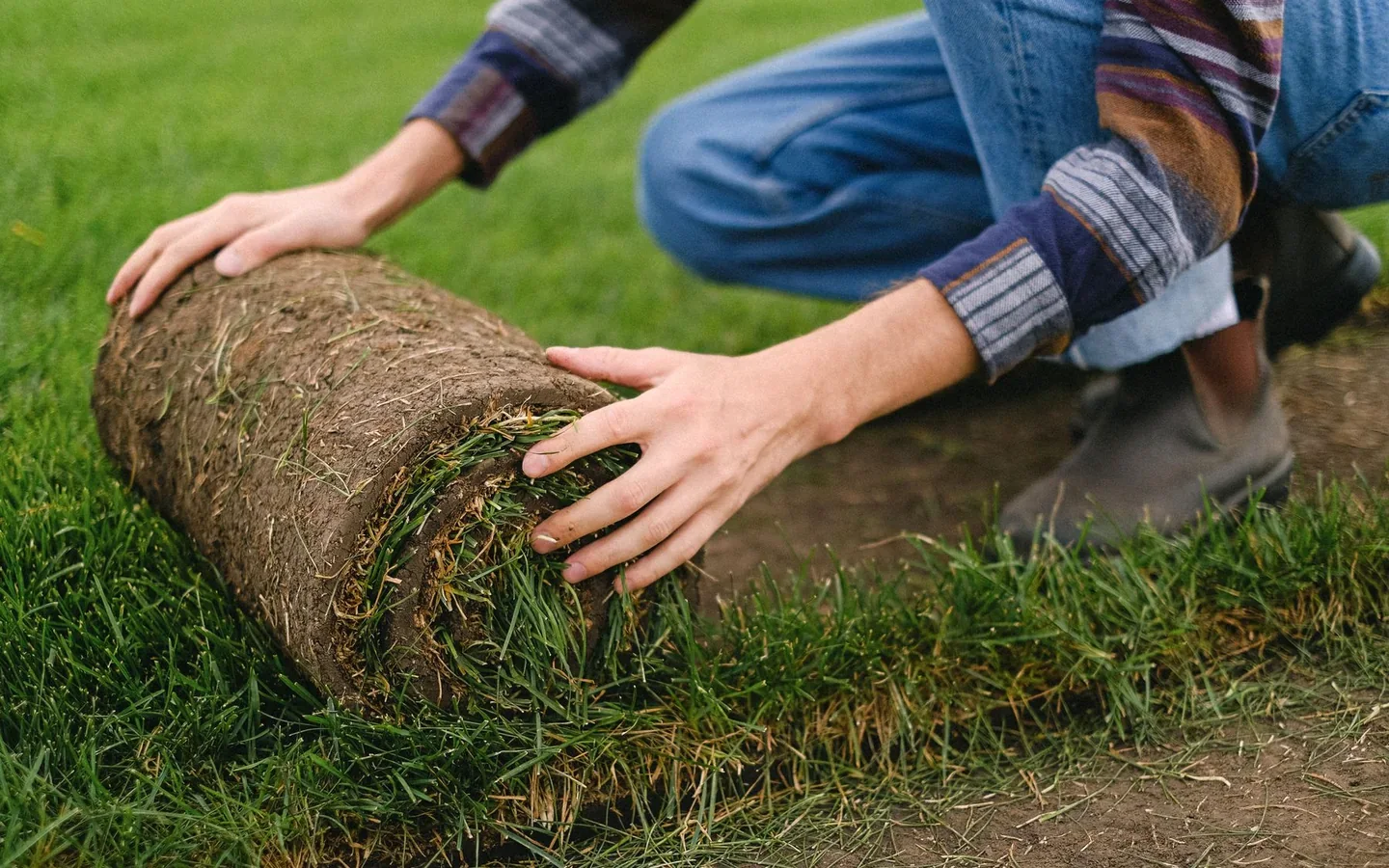
Turf looks like the instant answer to a patch of bare garden: lay down green rolls in the morning and enjoy a lawn that afternoon. But green isn't the same as established. The roots still need to grow into the ground below, and the preparation you do before the delivery arrives has a huge effect on how well that happens.
For most British gardens, a new lawn is straightforward to turf if you choose cool, suitable weather, level the ground properly and keep the newly laid grass moist until it roots. Here's the practical sequence.
When is the best time to lay turf?
Mid-autumn through early spring is generally the most reliable period in the UK, when soil is moist and temperatures are relatively cool. You can lay turf when the soil is workable, unfrozen and not waterlogged.
Avoid laying it in very hot, dry weather if possible. The grass then needs constant attention, and any gap in watering may cause it to shrink and brown before the roots establish.
Late autumn is often particularly convenient: the ground is still comparatively warm and the grass needs less mowing.
If you're dealing with a specific winter weather window, see our guide to laying turf in winter. This guide covers the full preparation and installation process.
Turf or seed: which should you choose?
| Consideration | Turf | Grass seed |
|---|---|---|
| Immediate appearance | Green surface as soon as laid | Bare soil until germination |
| Initial expense | Higher | Lower |
| Ground preparation | Essential | Essential |
| Establishment | Must root into the soil below | Must germinate and establish |
| Summer water demand | High if laid at an unsuitable time | Also high for establishing seedlings |
| Repairs | Individual damaged sections can be replaced | Thin areas can be overseeded |
Turf is useful when you want a predictable covering and cannot tolerate bare earth for weeks. Seed usually makes more sense for a large area on a tight budget.
Our grass seed versus new lawn guide explains the differences in establishment.
Measure the area before ordering
Measure the length and width in metres and multiply them to find square metres. For an irregular lawn, split the shape into manageable rectangles or triangles and add the results.
Order a modest allowance for cutting and waste, especially around curves and flowerbeds. Don't buy a huge surplus: turf begins deteriorating quickly when left rolled up.
Our garden area calculator helps measure mixed shapes.
Arrange delivery for a day when the soil will already be prepared and you have help available. Turf should be laid promptly after delivery, ideally the same day; leaving damp rolls stacked in warm weather can heat and damage the grass.
Remove old grass and weeds
Strip out worn-out turf, perennial weeds, large stones and unwanted roots before levelling. Don't simply roll new turf over an existing lawn or bury dense weeds beneath it.
Persistent weeds such as couch grass, bindweed and ground elder can grow back through a new lawn if their root systems remain alive.
Rake up debris and inspect drainage. If the old lawn failed because the ground stayed waterlogged, replacing the surface won't correct that underlying issue.
Our waterlogged garden guide helps distinguish drainage problems from temporary puddles after exceptional rain.
Prepare a firm, level seedbed
Loosen compacted soil to a suitable depth when it is workable. Incorporate appropriate topsoil if the area has little genuine soil or contains construction rubble.
Don't use a thick layer of loose compost as the only base. New turf needs a stable, level surface with contact across its underside.
Work the area through this order:
- Remove stones, old roots and weed debris.
- Loosen compacted patches without digging saturated clay into lumps.
- Add suitable topsoil where necessary and rake it evenly.
- Firm by walking over the area in short steps, using your weight to reveal soft spots.
- Rake the top lightly again to remove footprints and bumps.
- Check the level from several directions and fix hollows now.
Aim for firm ground that supports your weight without sinking, but isn't compacted into a hard slab. A prepared bed should feel even and stable underfoot.
Do you need fertiliser beneath the turf?
Some lawn suppliers recommend a suitable pre-turf fertiliser where a soil test or previous performance indicates it is needed.
It isn't essential to use a heavy feed in every garden. Strong fertiliser placed directly against roots at excessive rates can cause damage.
Follow a product's specified application rate and avoid burying concentrated granules in one strip.
Soil structure and moisture are more important than trying to force a lawn green through fertiliser alone.
Plan the direction of the first row
Begin along a straight edge, such as a path or patio. If the boundary is irregular, use a string line to keep the first row straight.
Lay the first strip flat and carefully butt the next roll against it. Don't stretch the turf to cover gaps.
For the second row, stagger the joints like brickwork so four corners don't meet at one point.
Work from planks laid on completed turf if you need to cross it, rather than repeatedly walking on the freshly levelled soil.
How to lay rolls without gaps
Unroll each piece with the grass upwards and the soil side against the prepared bed.
Press it gently into place, but don't tread the surface into ruts. Edges should meet neatly without overlapping.
Trim around curves and obstacles with a sharp half-moon edging iron or appropriate knife, using gloves and a stable surface.
Keep small cut fragments to a minimum; they dry faster and can be harder to establish. Use larger offcuts where possible.
Avoid leaving narrow strips along lawn edges where the soil will repeatedly dry out.
Firm the new lawn and water immediately
Once a section is in place, use a light roller if appropriate or firm carefully using a board to ensure good contact with the soil. The aim is to remove air gaps, not flatten the turf into compacted mud.
Water thoroughly as soon as each section is finished, particularly on a breezy day.
Check whether moisture reaches the soil beneath the turf. Wet grass blades alone are not evidence that the roots and lower soil are moist.
Keep joints snug. Turf edges can shrink away from one another if allowed to dry.
Watering during the first weeks
New turf needs consistent moisture while roots penetrate the soil.
During dry weather, this can mean frequent watering, especially in the first fortnight. The exact frequency depends on rainfall, temperature, soil and turf thickness.
Lift a small corner carefully in a discreet area to check moisture and rooting if necessary. Do not repeatedly pull at the turf once roots begin to anchor.
Avoid drowning it on heavy clay; continuous saturation prevents oxygen reaching developing roots.
Once the grass is firmly rooted, gradually move towards deeper, less frequent watering rather than keeping the soil surface permanently wet.
When can you walk on the new lawn?
Keep traffic off until the roots have knitted into the soil and the turf no longer lifts easily at the edge.
In favourable cool, moist conditions this may take several weeks, but cold ground slows rooting. Don't treat a fixed number of days as a guarantee.
A short careful inspection is different from children playing football or a dog running along the same strip repeatedly.
Use planks during any unavoidable early maintenance so weight is distributed.
The first mow: what to look for
Don't mow just because the blades have become tall. Check that the turf is anchored first.
Once rooted and actively growing, set the mower high and remove no more than about one-third of the grass height in the first cut. Use a sharp blade.
If the turf feels loose, delay mowing. Heavy machinery or a low cutting height can pull weakly rooted pieces away from the soil.
Keep mower turns gentle and avoid tight pivots on soft wet ground.
Edges, curves and sloping gardens
A sloped lawn may require extra care to stop rolls sliding downhill, particularly after watering.
Lay turf across the slope where practical, and use suitable biodegradable pegs on steeper sections following the turf supplier's recommendations.
Do not create a raised soil lip that sends water towards buildings or a neighbour's property. Consider proper drainage if the ground directs large amounts of runoff.
Finish edges with clean cuts and ensure the soil under them is as stable as the central area.
Troubleshooting new turf
Brown shrinking edges: often indicate drying. Check soil moisture and whether the pieces still meet.
Yellow patches soon after delivery: rolls may have overheated or lacked oxygen while stacked; contact the supplier if quality was poor on arrival.
Turf lifts weeks later: rooting may be delayed by cold, poor soil contact or waterlogging.
Puddles after rain: check underlying compaction and drainage rather than adding another layer of turf.
Uneven surface: correct significant hollows before laying; heavy post-installation rolling isn't a substitute for ground preparation.
Quick answers
Can you lay turf over old grass? No. Remove existing growth and prepare the soil beneath it.
Do you need a roller? Not always. Good soil preparation and gentle firming can be sufficient for a small lawn.
How long before the first mow? Wait until the new turf has rooted firmly, then mow on a high setting.
Can you lay turf in November? Often yes, if the soil is workable, not frozen or saturated.
A good new lawn starts underneath the green surface. Get the soil level and stable, lay fresh rolls quickly, keep roots moist and leave the grass undisturbed until it's ready to cope with normal use.