
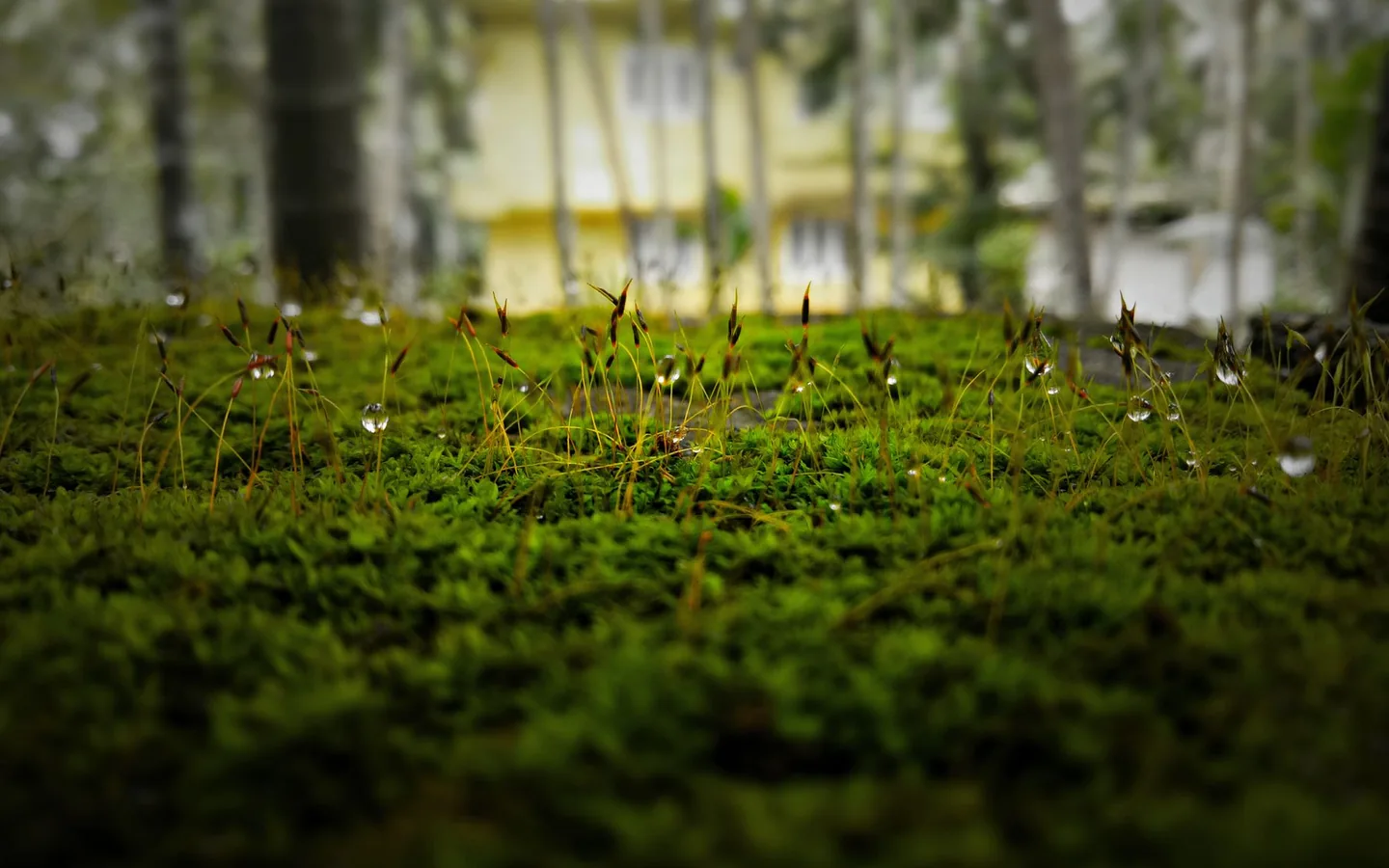
Moss in a lawn isn't necessarily a problem. Some people enjoy a soft green lawn with moss mixed through the grass, and moss supports small wildlife. But if you want a more conventional grass lawn, thick moss can crowd out weak turf and make the surface feel springy.
The lasting solution isn't just removing moss. It's improving the conditions that favour grass. Otherwise you can scarify a lawn every year and watch moss move straight back into the gaps.
Why does moss grow in lawns?
Moss usually takes advantage of places where grass is struggling, including:
- Persistent shade from trees, buildings or tall hedges.
- Compacted ground with limited root growth.
- Poor drainage and long periods of wetness.
- Mowing too short, weakening grass.
- Worn patches from feet, pets or regular use.
- Underfed turf with little vigour.
- Acidic soil in some gardens.
Moss is not always caused by acidity. Many species tolerate a range of pH values, so liming the lawn without a soil test is not a sensible default treatment.
Should you remove moss at all?
If the lawn is mainly a low-traffic green space, a little moss may be harmless or even welcome.
If you need durable grass for children playing, pets or regular mowing, reducing thick moss and strengthening turf may give a better surface.
Consider whether deep shade is ever going to support a traditional lawn. Under mature trees, a more relaxed mossy surface or a suitable shade garden may be more realistic than constant repair.
When should you remove moss in the UK?
Early autumn, commonly September and October, is an excellent time for scarifying because soil is still reasonably warm and grass can recover before winter.
Spring is another opportunity once the grass is growing strongly and the ground is no longer saturated or frozen.
Avoid aggressive scarification during summer drought, prolonged frost or when the grass isn't actively growing.
The exact dates depend on region and weather. A cool exposed lawn may recover more slowly than one in a mild sheltered garden.
Step-by-step: remove moss without ruining the grass
- Mow the lawn to a sensible height if necessary, but do not scalp it.
- Wait for conditions when turf is actively growing and the soil is not waterlogged.
- Use a spring-tined rake or a suitable scarifier to pull out loose moss and thatch.
- Work methodically in one direction, then lightly across where needed.
- Collect and remove the loosened material.
- Address compaction or drainage problems where they are contributing.
- Overseed thin areas with a suitable grass seed mix.
- Water the new seed appropriately and keep off heavily treated patches until established.
A lawn may look worse temporarily after scarifying. The job creates space for grass to grow back, so recovery depends on good conditions afterward.
Hand rake or powered scarifier?
For small lawns, a sturdy spring-tined rake provides good control and avoids hiring equipment.
A powered scarifier may be useful on a large lawn, but it's easy to cut too deeply if set incorrectly.
Start gently and adjust gradually. You want to remove moss and excess thatch, not tear the whole living turf and its roots from the ground.
Very aggressive passes on a wet or weak lawn can leave more bare soil than healthy grass.
Fix compacted ground with aeration
Compaction makes it difficult for grass roots to grow and for rainwater to soak into the ground.
On a problem lawn, hollow-tine aeration can help create openings for air, water and roots. Spiking may offer a temporary improvement but can be less effective on severe compaction.
Do the work when the soil is moist enough to penetrate but not saturated. Repeated traffic across very wet soil causes further damage.
Our lawn topdressing guide explains how to apply suitable dressing after appropriate preparation, rather than dumping thick sand on existing grass.
Overseed to stop moss reclaiming empty patches
Once the moss is removed and underlying problems are addressed, bare soil gives moss and weeds another opportunity.
Choose grass seed suited to the light and level of wear. Shade-tolerant mixtures can help in moderate shade, but no grass thrives in complete darkness.
Sow at the recommended rate into a suitably prepared surface, rake lightly and water until established.
Use our grass seed calculator to estimate how much seed you need for the affected area.
Raise the mowing height
Very short mowing weakens grass and exposes soil. During stressful hot or dry weather, allowing a slightly longer sward helps it cope.
Keep mower blades sharp. Dull blades tear grass rather than making clean cuts, leaving the lawn looking pale or ragged.
Mow regularly during active growth rather than allowing it to become very long and then scalping it in one pass.
Feeding a mossy lawn
If the turf is pale and undernourished, an appropriate lawn fertiliser may help the grass grow strongly enough to compete with moss.
But feeding will not fix deep shade, waterlogging or severe compaction.
Avoid applying heavy nitrogen just before winter or during drought. Choose a product suited to the season and follow the manufacturer's directions.
Should you use an iron-based moss treatment?
Some commercial moss treatments contain iron compounds and can blacken or suppress moss. Their availability and authorised uses vary.
No product kills lawn moss permanently, because new moss can establish whenever conditions continue to suit it.
Follow the label and avoid staining paving, clothing or patios with iron products.
A non-chemical approach—scarifying, aerating where necessary and strengthening turf—is often a sensible first plan.
Why does moss come back every winter?
A lawn that remains shaded and saturated will repeatedly favour moss, even if the summer grass looks fine.
Check whether gutters or drains direct extra water onto the lawn, whether traffic is compacting the same route, and whether trees have increased shade.
Our muddy lawn in winter guide covers the separate problem of saturated, worn turf.
Where the setting cannot be improved, consider changing the lawn's use or accepting some moss.
Can vinegar or washing-up liquid remove moss?
Household mixtures aren't a dependable lawn renovation method. They may scorch grass, alter soil conditions or affect other organisms without addressing why the moss grew.
Don't use salt or strong improvised sprays across a lawn.
Better results come from improving conditions and giving grass a chance to fill gaps.
A practical annual lawn routine
Spring: assess winter damage, mow appropriately, overseed where necessary and address drainage if the ground is workable.
Summer: avoid scalping, maintain sensible watering and reduce wear on struggling patches.
Autumn: scarify if needed, aerate compacted areas and overseed while turf can establish.
Winter: keep heavy traffic off waterlogged ground and plan repairs rather than working sodden soil.
For monthly jobs, see our lawn care in November guide.
Should I rake moss out of my lawn?
If you want a grass-dominant lawn, raking or scarifying can help. Choose a suitable recovery season and address the underlying cause.
Does lime stop moss?
Only use lime where a soil test and grass requirements justify it. Moss doesn't automatically indicate acidic soil.
Will moss return after scarifying?
It can if shade, compaction, drainage or weak turf remain unresolved. Stronger grass is the best long-term defence.